
Country Guide • Fiji
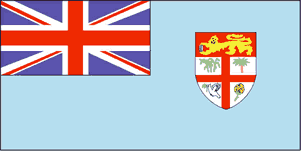
Fiji consists of 333 islands in the south west Pacific Ocean. About 110 of these islands are inhabited. The two largest are Viti Levu and Vanua Levu.
| Official Name | Republic of the Fiji Islands |
|---|---|
| Area | 18,270km² (7,054mile²) |
| Population | 868,000 |
| Continent | Australia/Oceania |
| Population per mile² | 123 |
| Capital City | Suva |
| Religions | Christians accounts for around 53% of the population, of which 85% are Methodist and 12% are Roman Catholic. 38% are Hindus and 8% are Muslims, both of which are faiths of the Fijian Indian population |
| Language | English is the official language, Fijian dialects are spoken by the indigenous Fijians (Bauan is the most spoken) and the Indian community speak Fiji-Hindi |
| Government | Democracy |
| Member of EU | N/A |
| Currency | Fiji Dollar |
| GDP | $4.7 billion |
| GDP per Head | $5,500 |
| Natural Resources | Timber, fish, gold and copper |
| Land Use | Arable Land 11% |
| Agriculture | Bananas, cassava (tapioca), coconuts, rice, sweet potatoes, sugarcane, cattle, pigs, goats and fish |
| Industry | Sugar, tourism, gold, fish, lumber and clothing |
| Tourism | With 333 exotic islands to choose from can swim with huge, harmless manta rays congregating by the shore, snorkel over giant rainbow gardens of soft coral, or scuba dive the White Wall and famous Astrolabe Reef. The island of Viti Levu offers a wealth of tropical scenery, from rushing mountain rivers and waterfalls in the depths of the rainforest, to palm-fringed beaches |
| Natural Hazards | Cyclonic storms can occur from November to January |
| Health Risks | Leptospirosis and Dengue fever. The dengue fever season runs from November to April. This mosquito-borne disease can kill. No means of prophylaxis (such as for malaria) against it exists. You should therefore ensure that you wear insect repellent at all times, most importantly during daylight hours when the dengue-carrying mosquitoes are active. |
| Climate | Fiji enjoys an ideal South Seas tropical climate.There are two main seasons - summer (November - April) and Winter (May - November). Maximum summer temperatures average 30°C (86°F) and the mean minimum is 23°C (73°F). There is more rainfall in the summer months, and it is hotter and more humid at this time of year. The winter average maximum is 26°C (79°F) and the mean minimum is 20°C (68°F). It is drier and cooler in the winter months |
| Time | GMT/UTC+12 hours |
| National Days | October 10 |
| Visas | Most travellers will automatically be issued a four week tourist visa upon arrival. This includes travellers from most Commonwealth countries, most North, South and Central American countries, Western Europe, Israel and Japan. The visa is issued free of charge and there is no additional charge for any subsequent extensions |
| British Embassy | Embassy Details |
Information Only
The content above is for information purposes only and we have tried to ensure that the information is as accurate as possible. We cannot accept any responsibility for any inconvenience, loss or injury as a result of the information above. You should always check and verify any critical information like visas, health and safety and customs with the relevant authorities before you travel since information can change at any time.