

Country Guide • Argentina
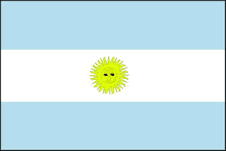
Argentina boasts a wide variety of cultural attractions and it is not short of its natural wonders too. Argentina's geography is varied and stunning. For cosmopolitan types, there's the elegant capital, Buenos Aires. This great city is renowned for its sophistication, although travellers expecting a more 'South American' feel are a little disappointed with its European influences.
| Official Name | República Argentina |
|---|---|
| Area | 2,766,890km² (1,068,296mile²) |
| Population | 38,740,000 |
| Continent | South America |
| Population per mile² | 36 |
| Capital City | Buenos Aires |
| Religions | 93% Roman Catholic, 2% Protestant, 2% Jewish, 3% Other |
| Language | Officially it’s Spanish but this form of Spanish differs from the traditional Catalan version. English, Italian, German and French are also spoken |
| Government | Republic |
| Member of EU | N/A |
| Currency | Peso |
| GDP | $391 Billion |
| GDP per Head | $10,200 |
| Natural Resources | Fertile plains of the pampas, lead, zinc, tin, copper, iron ore, manganese, petroleum and uranium |
| Land Use | Arable Land 9% |
| Agriculture | Citrus fruits, sunflower seeds, soybeans, grapes, corn, tobacco, peanuts, tea, wheat and livestock |
| Industry | Food processing, motor vehicles, consumer durables, textiles, chemicals and petrochemicals, printing, metallurgy, steel, agribusiness |
| Tourism | Both international travellers and Argentines who can no longer afford to travel abroad are using Argentina as a tourist destination and figures are rising annually |
| Natural Hazards | San Miguel de Tucuman and Mendoza areas in the Andes are subject to earthquakes. Argentina also experiences pamperos which are are violent windstorms that can strike the Pampas and northeast. There is occasional heavy flooding also |
| Health Risks | Cholera and dengue fever are hazards in the subtropical north |
| Climate | The climate varies from a humid sub-tropical climate in the north with the central semi-arid Pampa ranging from a tropical to a moderately cool climate. The southern area of the country is sub-arctic and is directly influenced by the prevailing westerly winds. Rainfall diminishes from east to west. Average temperature ranges in Buenos Aires are from -5 to 14°C in June to 17 to 29°C in January |
| Time | GMT/UTC-3 hours |
| National Days | 25 May - May Revolution, 10 June - Malvinas Day , 12 October Columbus Day |
| Visas | British citizens and most other foreigners do not require a visa to enter Argentina as a tourist. On presentation of a valid British passport you will be granted a 90-day stay in the country |
| British Embassy | Embassy Details |
Information Only
The content above is for information purposes only and we have tried to ensure that the information is as accurate as possible. We cannot accept any responsibility for any inconvenience, loss or injury as a result of the information above. You should always check and verify any critical information like visas, health and safety and customs with the relevant authorities before you travel since information can change at any time.