
Country Guide • Djibouti
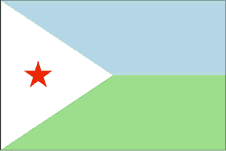
Djibouti lies in north east Africa on the Gulf of Aden at the southern entrance to the Red Sea. It borders on Ethiopia, Eritrea, and Somalia. The country is mainly a stony desert, with scattered plateaus and highlands.
| Official Name | Republic of Djibouti |
|---|---|
| Area | 23,000km² (8,880mile²) |
| Population | 457,000 |
| Continent | Africa |
| Population per mile² | 51 |
| Capital City | Djibouti |
| Religions | 94% Sunni Muslims, remainder being Roman Catholics, Protestants or Greek Orthodox Christians |
| Language | French and Arabic |
| Government | Unitary Multiparty Republic |
| Currency | Djibouti Franc |
| GDP | $619 million |
| GDP per Head | $1,300 |
| Natural Resources | Geothermal areas |
| Land Use | Arable Land 0% |
| Agriculture | A small amount of fruits, vegetables and livestock being goats and sheep |
| Industry | Construction, agricultural processing, shipping, oil, hides and skins |
| Tourism | Djibouti is a mass of black lava fields and endless stoney desert plains . But on the coast diving and snorkelling around Red Sea coral reefs is a must. The town of Djibouti is a blend of colonial French and modern Arabic. The city is crowded with Arab and African cultures and travellers are often regarded as curios and treated to traditional African hospitality |
| Natural Hazards | Occasional earthquakes; droughts; occasional cyclonic disturbances from the Indian Ocean bring heavy rains and flash floods |
| Health Risks | Bilharzia (in the freshwater lakes), HIV/AIDS |
| Climate | Djibouti has a semi arid climate that is very hot and dry. There are two seasons, a dry season from May to October and a relatively cool season from November to April. The rainfall on the coast usually occurs between November to March, whereas inland it falls between April to October. Average annual rainfall for Djibouti City is 5 inches and average temperature ranges are from 23 to 29°C in January to 31 to 41°C in July |
| Time | GMT/UTC+3 hours |
| National Days | June 27 Independence Day. Fridays are also taken as holidays |
| Visas | Unless you are a French citizen you will need a visa, which is valid for 30 days. Visitors also require evidence of a yellow fever vaccination |
| British Embassy | Embassy Details |
Information Only
The content above is for information purposes only and we have tried to ensure that the information is as accurate as possible. We cannot accept any responsibility for any inconvenience, loss or injury as a result of the information above. You should always check and verify any critical information like visas, health and safety and customs with the relevant authorities before you travel since information can change at any time.